
Assessment
Dr. Reznikov palpates the affected muscles to locate and confirm each active trigger point requiring treatment.

Targeted Myofascial Pain Relief
Understanding Myofascial Trigger Points
Trigger points are hyperirritable spots within taut bands of skeletal muscle that produce local and referred pain. These knotted areas develop from overuse, injury, poor posture, or stress and can persist for months or years without treatment. The pain often radiates to other areas, making it difficult to identify the true source. Everyday activities like sitting at a desk, driving, or sleeping in an awkward position can aggravate trigger points, creating a cycle of tension, spasm, and chronic discomfort that stretches and over-the-counter medications cannot resolve.
Trigger point injections deliver medication directly into the knotted muscle fiber, breaking the pain-spasm cycle at its source. By precisely targeting the trigger point with a small needle, Dr. Reznikov deactivates the irritable focus, relaxes the taut band, and restores normal muscle function. The procedure takes only minutes, provides rapid relief, and can be combined with physical therapy and other interventional treatments at Pain Treatment Center of Maryland to address the underlying causes of your myofascial pain and prevent recurrence.

Targeted Myofascial Deactivation Therapy
Trigger point injections (TPIs) are a minimally invasive procedure in which a small needle is inserted directly into a myofascial trigger point — a palpable, hyperirritable knot within skeletal muscle. The injection typically contains a local anesthetic such as lidocaine, sometimes combined with a corticosteroid, to deactivate the trigger point and interrupt the pain-spasm cycle. In some cases, dry needling (insertion without medication) is used when patients are sensitive to injectates.
The mechanism works by mechanically disrupting the contracted muscle fibers within the taut band and flooding the area with anesthetic to block pain signaling. This combination relaxes the muscle, improves local blood flow, and reduces the inflammatory mediators concentrated at the trigger point. Trigger point injections are supported by clinical evidence and widely used in physical medicine and rehabilitation settings for the management of myofascial pain syndrome, tension-type headaches, and musculoskeletal pain conditions.

Advantages of This Approach

Many patients experience immediate improvement in pain and range of motion after treatment
Small needle with no incisions, sutures, or general anesthesia required
Return to work and daily activities the same day with no recovery period
Medication delivered directly to the knotted muscle fiber causing your pain
Enhances the effectiveness of physical therapy, nerve blocks, and rehabilitation programs
Compare Your Options
| Treatment | Mechanism | Time | Results | Duration | Downtime | Best For |
|---|---|---|---|---|---|---|
| Trigger Point Injections | Anesthetic + mechanical disruption of trigger point | 15-30 min | Often immediate | Weeks to months | None | Myofascial pain, muscle knots, referred pain patterns |
| Nerve Block | Anesthetic blocks nerve signal transmission | 15-30 min | Within minutes | Hours to months | None to minimal | Nerve-mediated pain, diagnostic tool, regional pain |
| Dry Needling | Mechanical needle insertion without medication | 20-40 min | 24-72 hours | Days to weeks | Mild soreness | Muscle tension, patients sensitive to injectates |

Candidacy and Considerations
Trigger point injections are effective for a wide range of patients experiencing myofascial pain that has not adequately responded to conservative measures such as stretching, massage, or oral medications. Dr. Reznikov evaluates each patient individually to determine whether trigger point injections are the most appropriate treatment for their pain pattern.
If you have questions about whether trigger point injections are appropriate for your condition, Dr. Reznikov will conduct a thorough evaluation and discuss all available options during your consultation at Pain Treatment Center of Maryland.
Dr. Reznikov palpates the affected muscles to locate and confirm each active trigger point requiring treatment.
Dr. Reznikov cleanses the skin over the injection site and may mark the identified trigger points for precision.
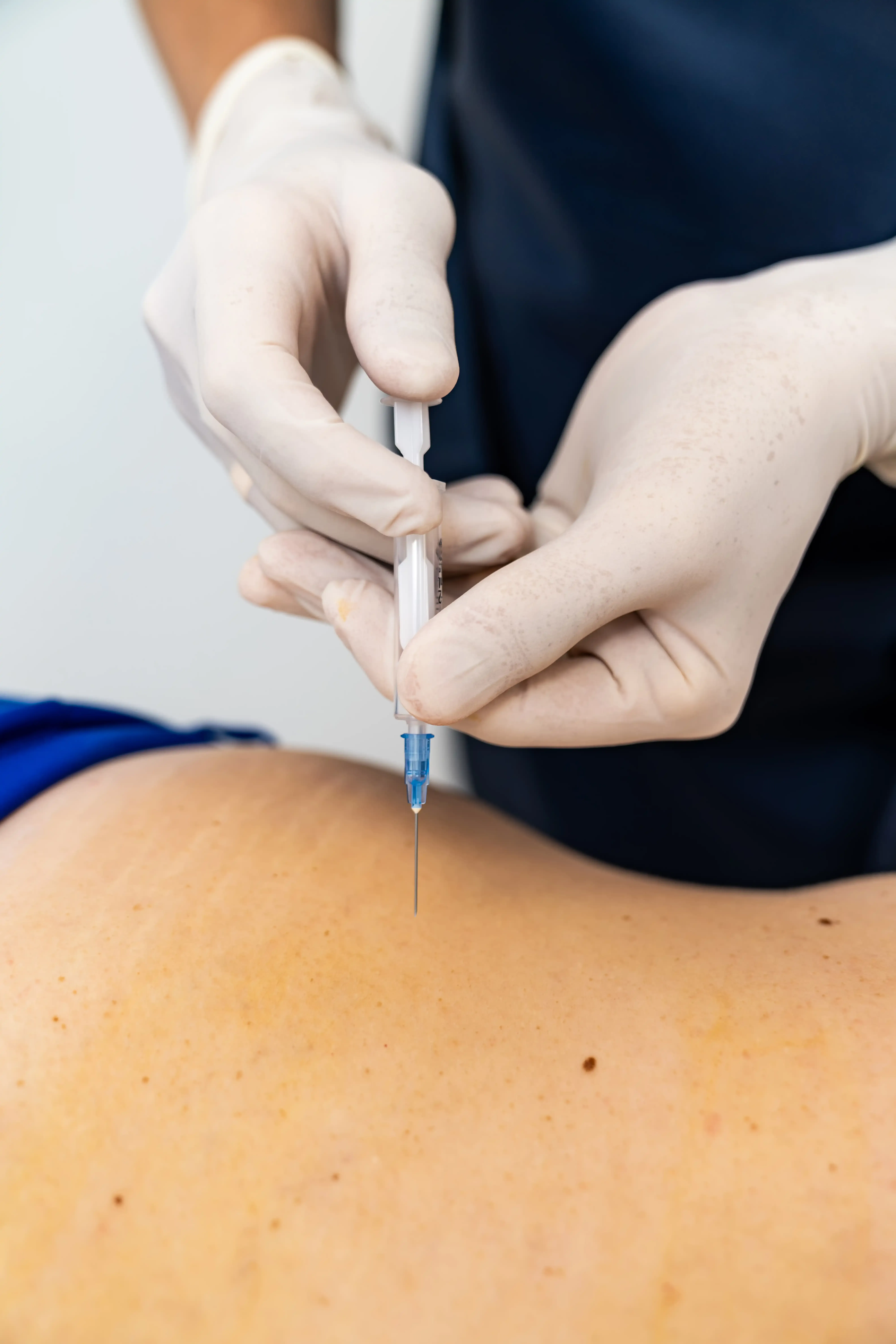
Dr. Reznikov inserts a small needle into the trigger point and delivers a local anesthetic to deactivate the knot.
Dr. Reznikov applies pressure to the site and guides you through gentle stretches to maximize the treatment benefit.

What to Know
Trigger point injections are a well-established, low-risk procedure when performed by a trained specialist. Dr. Reznikov's fellowship training in interventional spine and musculoskeletal medicine ensures precise needle placement and proper technique to minimize complications.
Common side effects include mild soreness or bruising at the injection site, which typically resolves within 24-48 hours. Some patients experience temporary numbness in the area from the local anesthetic, lasting 1-2 hours. A brief increase in pain immediately after injection (known as a flare response) may occur as the trigger point is disrupted but subsides quickly.
Rare side effects include infection at the injection site, bleeding, allergic reaction to the anesthetic, and nerve injury. Pneumothorax (collapsed lung) is an extremely rare risk when injecting trigger points in the upper back or chest wall region, which is why Dr. Reznikov uses precise anatomical knowledge and careful technique for these areas.
Contact Pain Treatment Center of Maryland at (410) 833-1011 if you experience increasing pain, fever, redness or swelling at the injection site, or difficulty breathing after treatment.
The cost of trigger point injections at Pain Treatment Center of Maryland depends on the number of trigger points treated per session and whether additional imaging or diagnostic evaluation is required. During your consultation, Dr. Reznikov will develop a personalized treatment plan and our team will provide a clear estimate of costs.
Insurance Coverage: Trigger point injections are a recognized medical procedure covered by most major insurance plans, including Medicare and Medicaid, when deemed medically necessary. Our office verifies your benefits and obtains any required pre-authorization before your appointment.
Financing Available: For patients with out-of-pocket costs, we offer financing through CareCredit to make treatment accessible. Our front desk team can help you explore payment options that work for your budget.
Call (410) 833-1011 to schedule your consultation and learn about your coverage options for trigger point injections in Reisterstown, MD.

Expert Care in Reisterstown, MD
Dual fellowship in interventional spine and musculoskeletal medicine for precise injections
Thorough evaluation identifies all trigger points and underlying pain generators
Combines injections with physical therapy and rehabilitation for lasting results
Personalized care plans tailored to your specific pain patterns and recovery goals
Discover other treatments that complement your care plan
Answers to Your Questions
Trigger points are hyperirritable knots within taut bands of skeletal muscle. They develop from overuse, injury, poor posture, stress, or repetitive movements. These knots can cause localized pain and refer pain to other areas of the body, making them a common source of chronic myofascial discomfort.
Dr. Reznikov inserts a small needle directly into the trigger point and injects a local anesthetic, sometimes combined with a corticosteroid. The needle mechanically disrupts the knotted muscle fibers while the medication blocks pain signals and reduces inflammation, breaking the pain-spasm cycle.
The number of sessions varies based on the number and severity of your trigger points and how your body responds to treatment. Some patients experience lasting relief after one or two sessions, while chronic myofascial pain may require periodic treatments every few weeks alongside physical therapy.
Most patients feel a brief pinch when the needle enters the skin, followed by a muscle twitch response as the trigger point is contacted. This twitch is actually a positive sign indicating the trigger point has been accurately targeted. The local anesthetic provides rapid numbing and the entire procedure takes only minutes.
Trigger point injections are most effective for myofascial pain syndrome, tension-type headaches, neck and upper back pain, shoulder pain, and muscle pain from sports or work-related injuries. They are also beneficial for patients with fibromyalgia-related trigger points and chronic pain that has not responded to conservative treatments.
You can return to normal activities immediately after treatment. Mild soreness at the injection site is common and typically resolves within 24-48 hours. Dr. Reznikov may recommend applying ice, gentle stretching, and avoiding strenuous activity for the rest of the day to maximize treatment benefits.
Pain relief duration varies by individual and typically ranges from several weeks to several months. Patients who combine trigger point injections with physical therapy, stretching, and postural correction often experience longer-lasting results as the underlying causes of trigger point formation are addressed.
Yes, trigger point injections are a recognized medical procedure covered by most major insurance plans, including Medicare and Medicaid, when medically necessary. Our office verifies your benefits before your appointment. CareCredit financing is also available for any out-of-pocket costs.