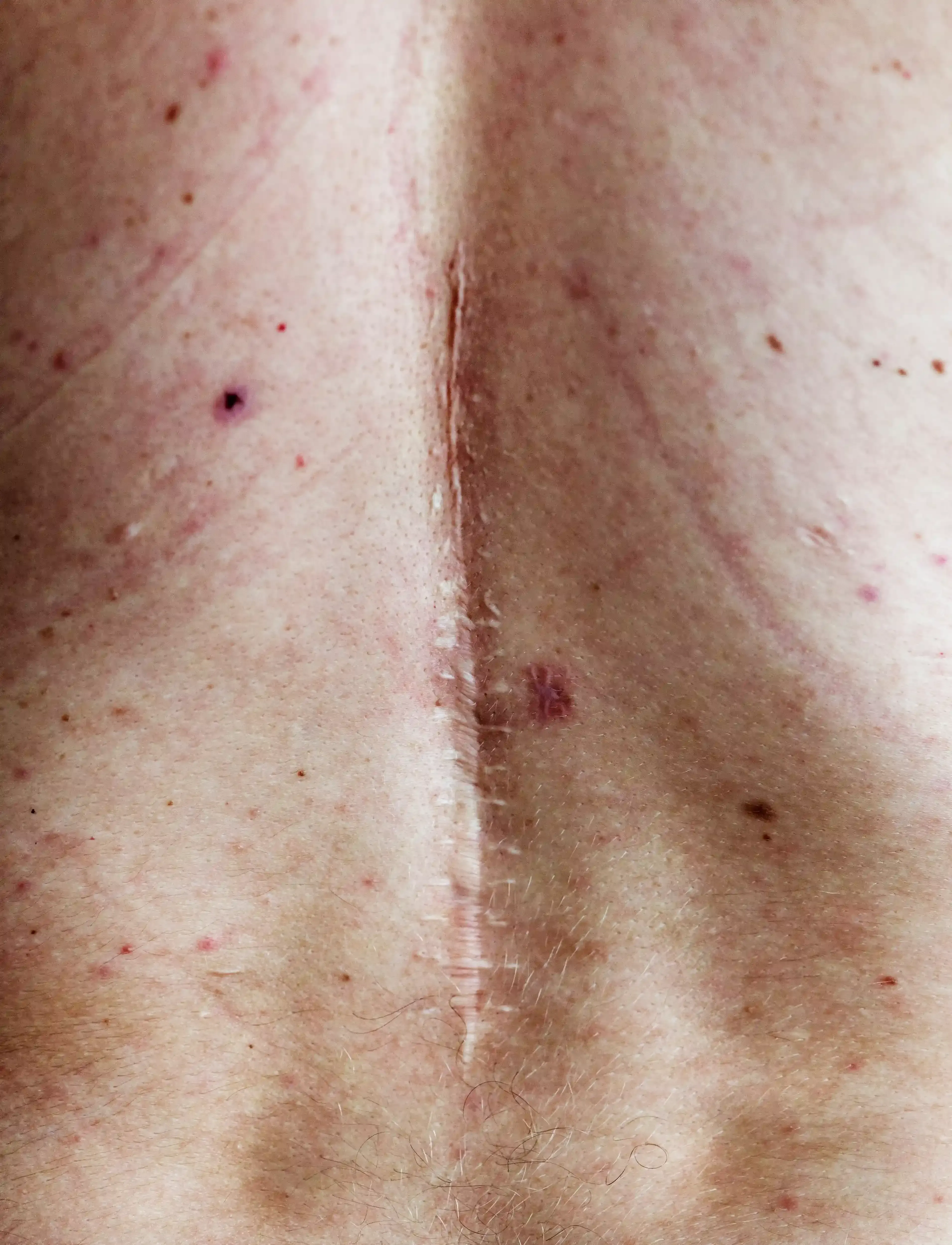



Pain that lingers past 3 months after surgery rarely has a single cause. In most cases it reflects an overlap of nerve injury, scar tissue, central nervous system changes and deconditioning. A small percentage of cases will involve residual mechanical issues, such as a missed disc fragment after spine surgery, hardware-related irritation, or biomechanical changes from a joint procedure.
It is important to separate dangerous post-op pain from chronic post-surgical pain. Signs of infection (spreading redness, warmth, fever, drainage from the incision) or new neurologic deficits (sudden weakness, bowel or bladder changes, saddle anesthesia) are surgical emergencies and need immediate evaluation by your surgeon or the nearest emergency department. Our team is not a substitute for that follow-up. When your surgeon has cleared infection and structural emergencies, interventional pain care can help quiet residual nerve, scar and myofascial pain that physical therapy alone has not resolved.