
Preparation
Dr. Reznikov reviews your imaging and positions you comfortably, then sterilizes the injection site and applies local anesthetic.

Targeted Spinal Pain Relief

Understanding the Root Cause
Spinal nerve inflammation from herniated discs, spinal stenosis, or degenerative changes can cause debilitating pain that radiates into the arms or legs. Many patients in Reisterstown and surrounding communities like Owings Mills, Pikesville, and Randallstown struggle with chronic back pain, sciatica, or neck pain that limits their ability to work, exercise, and enjoy life. Over-the-counter medications often provide only temporary relief, and the uncertainty of not knowing what's causing the pain adds frustration to an already difficult situation.
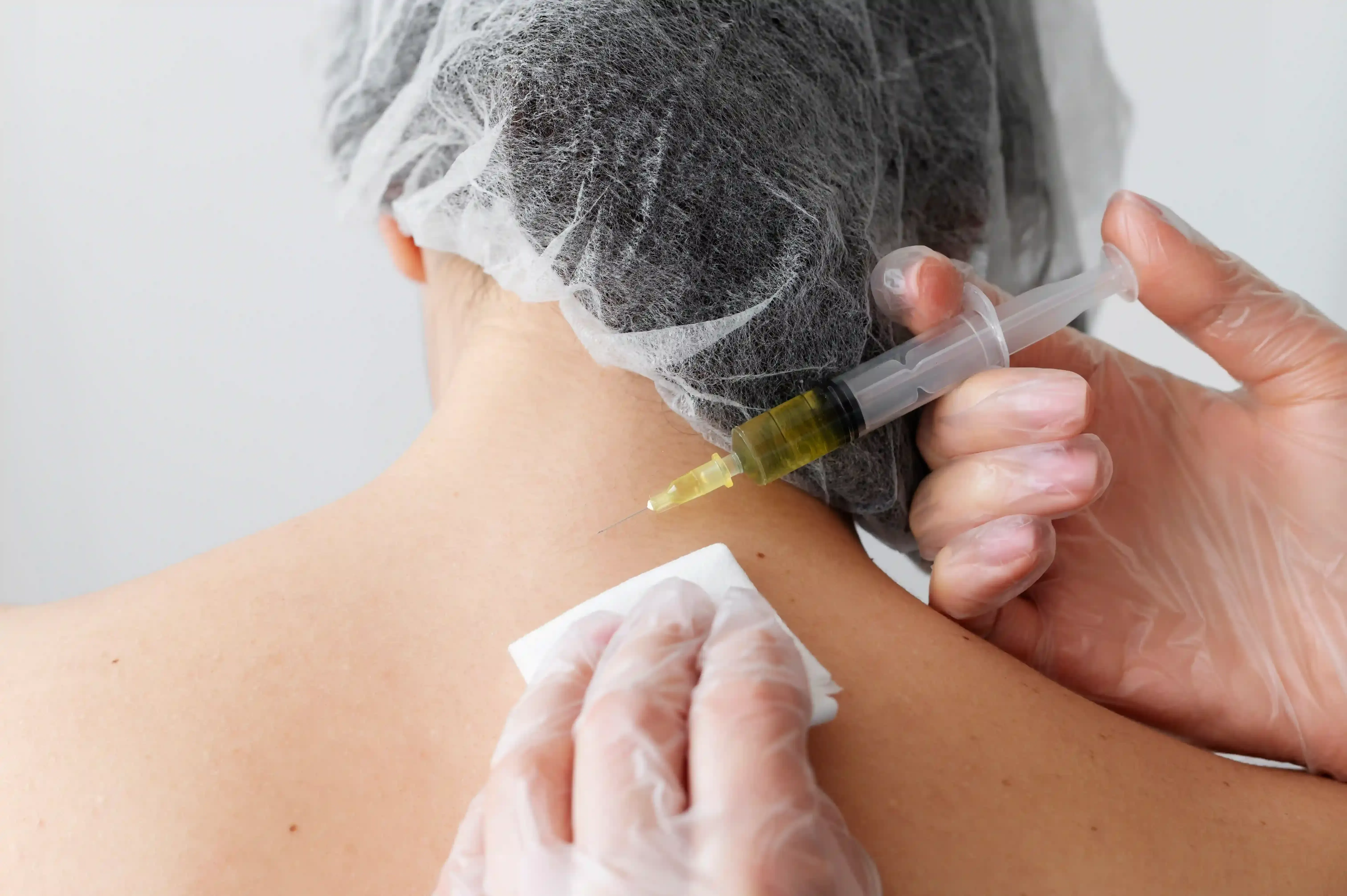
An epidural steroid injection delivers powerful anti-inflammatory medication directly to the inflamed nerve roots in the epidural space of the spine. Unlike oral medications that must travel through the entire body, this targeted approach concentrates relief precisely where it's needed. Under fluoroscopic guidance, Dr. Reznikov places the injection with pinpoint accuracy, reducing inflammation and swelling around compressed nerves. The result is meaningful pain reduction that allows patients to participate more fully in physical therapy and return to the activities they love.

Fluoroscopy-Guided Spinal Pain Relief
An epidural steroid injection (ESI) is a minimally invasive procedure that delivers corticosteroid medication directly into the epidural space surrounding the spinal cord and nerve roots. The epidural space is the fat-filled area between the protective covering of the spinal cord (dura mater) and the vertebral wall. By placing anti-inflammatory medication at this precise location, the injection reduces swelling and irritation of the spinal nerves responsible for pain.
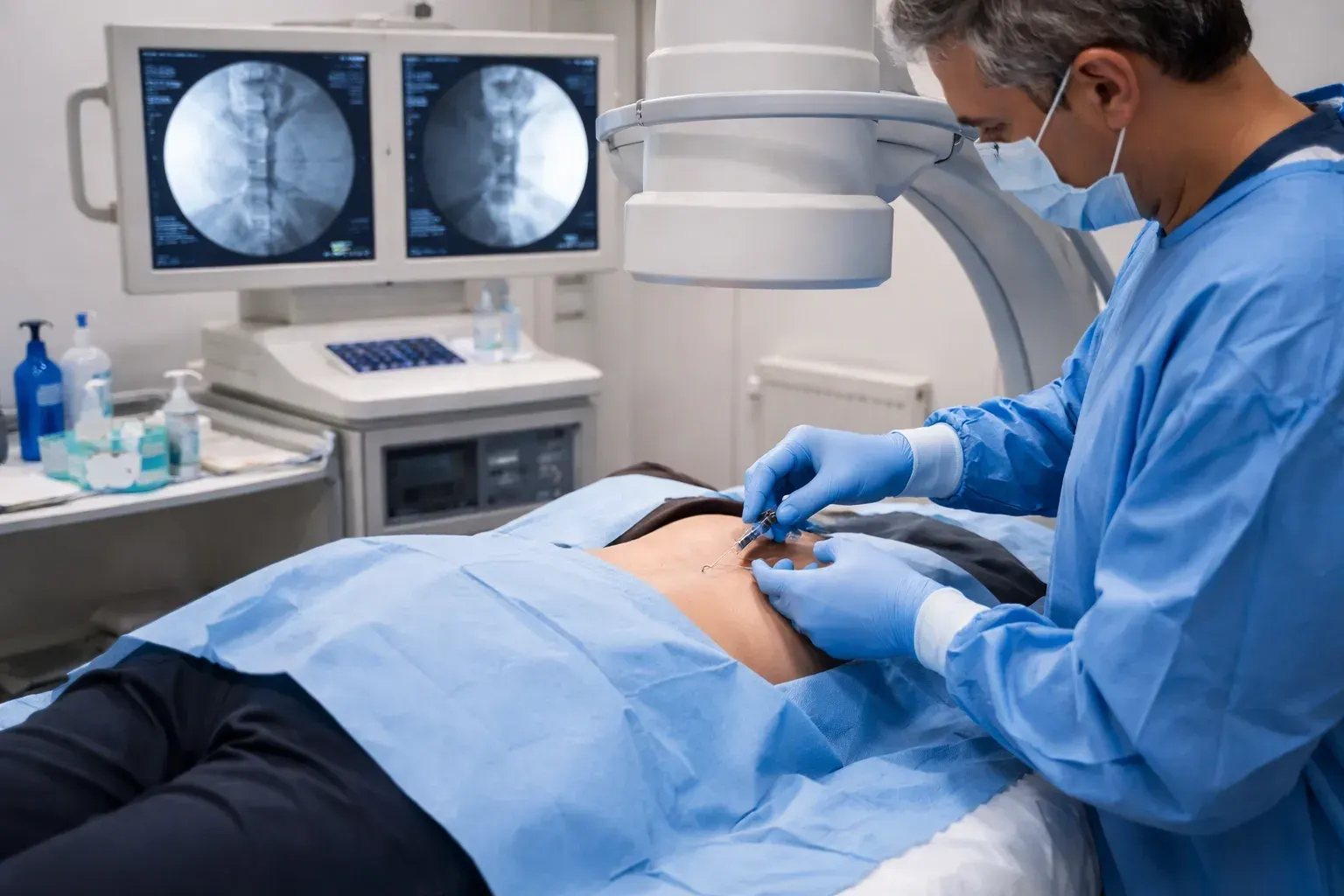
There are three primary approaches to epidural steroid injection: interlaminar, transforaminal, and caudal. A transforaminal epidural steroid injection targets a specific nerve root through the neural foramen, offering the most precise delivery. Dr. Reznikov selects the optimal approach based on your diagnosis, pain pattern, and imaging findings. All injections are performed under real-time fluoroscopic (X-ray) guidance with contrast dye confirmation to ensure accurate needle placement and maximize therapeutic benefit.
Lumbar epidural steroid injections address lower back pain and sciatica, while cervical epidural steroid injections target neck pain radiating into the arms. The procedure has been used for decades and is supported by extensive clinical evidence as an effective component of comprehensive pain management.

Proven Pain Relief
Medication delivered directly to the inflamed nerve root for maximum effectiveness
No incisions or general anesthesia required with rapid recovery time
Confirms the specific pain source to guide future treatment decisions
Pain reduction enables participation in physical therapy and daily activities
Effective conservative option that may eliminate the need for spinal surgery
Compare Your Options
| Treatment | Mechanism | Time | Results | Duration | Downtime | Best For |
|---|---|---|---|---|---|---|
| Epidural Steroid Injection | Anti-inflammatory at nerve root | 15-30 min | 2-7 days | 3-6 months | 24-48 hours | Radiculopathy, disc herniation, stenosis |
| Medial Branch Block | Numbs facet joint nerves | 15-20 min | Immediate | Hours to weeks | Minimal | Facet joint pain, diagnostic confirmation |
| Radiofrequency Ablation | Heat-based nerve disruption | 30-60 min | 2-4 weeks | 6-18 months | 1-2 weeks | Confirmed facet or SI joint pain |

Candidacy and Considerations
Epidural steroid injections are most effective for patients experiencing spinal nerve-related pain that has not responded adequately to conservative treatments such as oral medications, rest, and physical therapy.
Dr. Reznikov conducts a thorough evaluation including imaging review to determine whether an epidural steroid injection is the right approach for your specific condition.
Dr. Reznikov reviews your imaging and positions you comfortably, then sterilizes the injection site and applies local anesthetic.
Using real-time fluoroscopic guidance, Tatyana advances a thin needle to the epidural space and confirms placement with contrast dye.
Dr. Reznikov delivers the corticosteroid and anesthetic solution directly to the inflamed nerve root for targeted relief.
You rest briefly in the recovery area while Dr. Reznikov's team monitors you before providing aftercare instructions.

What to Know
Epidural steroid injections are considered safe and well-tolerated when performed by a trained specialist using fluoroscopic guidance. Dr. Reznikov follows strict safety protocols to minimize risk.
Common side effects include temporary soreness at the injection site, mild headache, and a brief period of increased pain (steroid flare) that typically resolves within 24-48 hours. Some patients experience facial flushing, difficulty sleeping, or temporary changes in blood sugar levels.
Less common side effects may include temporary leg weakness or numbness that resolves within hours, water retention, or mood changes. These are typically mild and short-lived.
Rare complications include infection, bleeding, nerve injury, dural puncture headache, or allergic reaction to the medication. Dr. Reznikov's use of fluoroscopic guidance with contrast confirmation significantly reduces these risks by ensuring precise needle placement.
Patients with diabetes should monitor blood sugar closely for 1-2 weeks following the injection, as corticosteroids may cause temporary elevation. Most epidural steroid injection side effects resolve on their own without intervention.
The cost of an epidural steroid injection in Reisterstown, MD varies depending on the approach used (interlaminar vs. transforaminal), the spinal region treated (cervical, thoracic, or lumbar), and whether imaging is included. Dr. Reznikov will provide a detailed cost estimate during your consultation based on your specific treatment plan.
Epidural steroid injections are typically covered by most major health insurance plans, including Medicare, when deemed medically necessary. Our team at Pain Treatment Center of Maryland will verify your benefits and explain your coverage before your procedure.
For patients with out-of-pocket expenses, we offer flexible payment options through CareCredit financing to make treatment accessible. Contact us at (410) 833-1011 to discuss your insurance coverage and payment options.
Reisterstown's Trusted Pain Experts
Dual fellowship in Interventional Spine & Sports Medicine and Musculoskeletal Medicine
Real-time X-ray guidance with contrast confirmation for accurate needle placement
ESI integrated with physical therapy and rehabilitation for lasting results
Injection approach and medication tailored to your specific diagnosis and anatomy
Discover other treatments that complement your care plan
Answers From Dr. Reznikov
An epidural steroid injection is a minimally invasive procedure that delivers anti-inflammatory corticosteroid medication directly into the epidural space surrounding the spinal nerves. It reduces swelling and irritation to relieve pain caused by conditions like herniated discs, spinal stenosis, and sciatica.
Most patients begin to notice relief within 2-7 days as the corticosteroid reduces inflammation around the affected nerve roots. Some patients experience immediate partial relief from the local anesthetic included in the injection. Peak benefit typically occurs at 2-4 weeks.
Generally, Dr. Reznikov recommends no more than three to four epidural steroid injections in a 12-month period to minimize potential side effects of corticosteroids. The exact number depends on your response to treatment and overall health. Many patients achieve lasting relief with one to two injections.
Epidural steroid injections effectively treat radicular pain from herniated discs, lumbar or cervical spinal stenosis, degenerative disc disease, sciatica, and radiculopathy. They target nerve root inflammation responsible for pain radiating into the arms or legs.
Most patients report only mild discomfort similar to a pressure sensation. Dr. Reznikov numbs the skin and deeper tissues with local anesthetic before placing the epidural needle. The entire procedure takes 15-30 minutes, and many patients are surprised by how well-tolerated it is.
Recovery is rapid. Most patients rest for 15-30 minutes after the procedure and can return home the same day. Light activities can typically be resumed immediately, though Dr. Reznikov recommends avoiding strenuous exercise and heavy lifting for 24-48 hours.
An interlaminar approach enters the epidural space between the vertebral laminae and distributes medication broadly. A transforaminal epidural steroid injection targets a specific nerve root through the neural foramen for more precise delivery. Dr. Reznikov selects the approach based on your diagnosis and pain pattern.
Yes, epidural steroid injections are covered by most major health insurance plans, including Medicare, when medically necessary. Our staff at Pain Treatment Center of Maryland will verify your benefits and explain your coverage before scheduling your procedure. CareCredit financing is also available.