
Preparation
Dr. Reznikov reviews your imaging and medical history, then positions you comfortably on the procedure table with monitoring equipment in place.

Precise Spinal Pain Diagnosis

Understanding Facet Joint Pain
Chronic lower back pain and neck pain can make even simple daily tasks feel overwhelming. When facet joints in your cervical, thoracic, or lumbar spine become inflamed or arthritic, the pain can radiate across your back, neck, and shoulders. Many patients struggle for months or years without understanding the true origin of their discomfort, cycling through medications and therapies that provide only temporary relief because they aren't targeting the root cause.
A medial branch block injection delivers targeted local anesthetic to the small medial branch nerves that carry pain signals from your facet joints. By temporarily numbing these specific nerves under fluoroscopic guidance, Dr. Reznikov can confirm whether your facet joints are the primary pain generator. This diagnostic precision is essential for developing an effective long-term treatment strategy, including potential radiofrequency ablation for lasting relief.

Fluoroscopy-Guided Diagnostic Injection
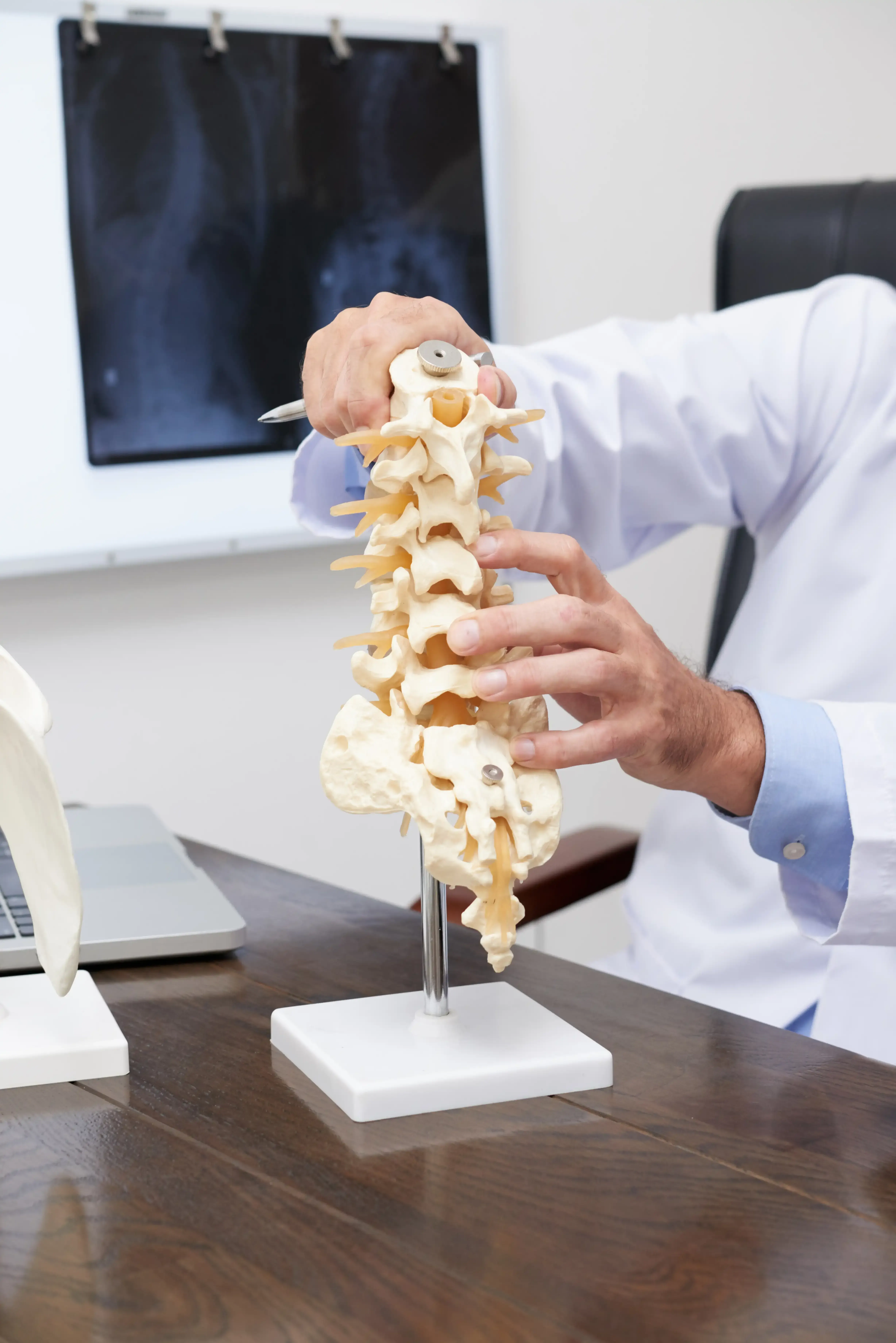
A medial branch block is a diagnostic nerve block procedure used to determine whether the facet joints in your spine are the source of your chronic pain. The facet joints are small, paired joints located at each spinal segment that allow your spine to bend and twist. Each facet joint is innervated by medial branch nerves — tiny sensory nerves that transmit pain signals from the joint to your brain.
During the procedure, Dr. Reznikov uses real-time fluoroscopic (X-ray) guidance to place a thin needle precisely near the medial branch nerves supplying the suspected facet joint. A small amount of local anesthetic is then injected to temporarily block pain signals. If you experience significant pain relief during the hours following the injection, it confirms that the targeted facet joint is your primary pain source. This diagnostic confirmation is a critical step before proceeding to longer-lasting treatments such as radiofrequency ablation, which can provide months of sustained relief.

Diagnostic Precision

Confirms the exact source of your spinal pain before committing to further treatment
Performed with a thin needle under fluoroscopic guidance with local anesthetic only
Most patients return to normal activities within 24 hours of the procedure
A positive block qualifies you for radiofrequency ablation for long-lasting relief
Excellent safety profile with minimal side effects compared to surgical alternatives
Treatment Comparison
| Treatment | Mechanism | Time | Results | Duration | Downtime | Best For |
|---|---|---|---|---|---|---|
| Medial Branch Block | Local anesthetic blocks nerve signals from facet joints | 15-30 min | Immediate diagnostic relief | 4-8 hours (diagnostic) | 24 hours | Diagnosing facet joint pain before ablation |
| Radiofrequency Ablation | Heat lesion disrupts nerve signal transmission | 30-60 min | Gradual over 2-4 weeks | 6-12 months | 1-3 days | Long-term facet pain relief after positive block |
| Epidural Steroid Injection | Corticosteroid reduces inflammation around spinal nerves | 15-30 min | Within 1-2 weeks | Weeks to months | 24 hours | Nerve root inflammation and radicular pain |

Candidacy & Contraindications
Medial branch blocks are recommended for patients whose chronic spinal pain may originate from the facet joints. Dr. Reznikov evaluates each patient's history, imaging, and symptoms to determine whether this diagnostic procedure is the appropriate next step.
Dr. Reznikov discusses all contraindications during your initial consultation and may recommend alternative diagnostic approaches if a medial branch block is not suitable for your situation.
Dr. Reznikov reviews your imaging and medical history, then positions you comfortably on the procedure table with monitoring equipment in place.
Dr. Reznikov cleanses the injection site and applies a local anesthetic to numb the skin and superficial tissues for your comfort.
Using real-time fluoroscopic guidance, Dr. Reznikov advances a thin needle precisely to the medial branch nerve near the targeted facet joint.
Dr. Reznikov injects a small volume of local anesthetic to temporarily block pain signals from the facet joint, then monitors your initial response.
Dr. Reznikov asks you to perform movements that typically trigger your pain and records your pain levels to evaluate the diagnostic result.
What to Know
Medial branch blocks are considered very safe when performed by a fellowship-trained interventional spine specialist like Dr. Reznikov. The most common side effects are mild and temporary.
Common side effects: Mild soreness or bruising at the injection site typically resolves within 1-2 days. Some patients experience temporary numbness in the area surrounding the injection. Occasionally, patients may notice a brief increase in pain once the local anesthetic wears off before settling back to baseline levels.
Rare side effects: Infection at the injection site, allergic reaction to the anesthetic, temporary leg or arm weakness, and minor bleeding. Dr. Reznikov uses fluoroscopic guidance and sterile technique to minimize these risks.
Contact Pain Treatment Center of Maryland immediately at (410) 833-1011 if you experience fever, increasing redness or swelling at the injection site, severe headache, or progressive weakness following your procedure.
The cost of a medial branch block varies based on the number of spinal levels treated, whether cervical, thoracic, or lumbar nerves are targeted, and your individual insurance coverage. Most major insurance plans and Medicare cover medial branch blocks when deemed medically necessary.
At Pain Treatment Center of Maryland, we believe financial concerns should never prevent you from getting an accurate pain diagnosis. Our team verifies your insurance benefits before your appointment and provides a clear cost estimate so there are no surprises.
We accept CareCredit financing to help make your pain management procedures more affordable. CareCredit offers flexible monthly payment plans, including promotional interest-free options for qualified applicants.
To discuss pricing specific to your treatment plan, call our Reisterstown office at (410) 833-1011 or schedule a consultation with Dr. Reznikov.

Reisterstown's Pain Specialists
Dual fellowship in Interventional Spine and Musculoskeletal & Sports Medicine
Real-time X-ray guidance ensures exact needle placement for reliable results
Full spectrum of interventional procedures from diagnosis through lasting treatment
Individualized treatment plans tailored to your specific pain condition and goals
Discover other treatments that complement your care plan
Your Questions Answered
A medial branch block is a diagnostic injection that temporarily numbs the small medial branch nerves supplying a specific facet joint in your spine. If the injection significantly reduces your pain, it confirms that the targeted facet joint is the source of your discomfort. This information guides Dr. Reznikov in recommending the most effective long-term treatment.
A medial branch block is primarily a diagnostic procedure. While you may experience temporary pain relief from the local anesthetic, the main purpose is to confirm which facet joint is causing your pain. A positive result typically leads to radiofrequency ablation, which provides longer-lasting therapeutic relief of 6-12 months.
The anesthetic effect from a medial branch block typically lasts 4-8 hours. This temporary relief window is the diagnostic period — Dr. Reznikov uses your pain response during this time to determine whether the facet joint is your primary pain source. Lasting relief comes from follow-up procedures like radiofrequency ablation.
If your medial branch block provides significant pain relief (typically 80% or greater reduction), Dr. Reznikov may recommend radiofrequency ablation to create a longer-lasting nerve block at the same location. If the block does not relieve your pain, other diagnostic approaches will be explored to identify the true source of your symptoms.
Dr. Reznikov will provide specific preparation instructions during your consultation. Generally, you may need to temporarily stop blood-thinning medications, avoid eating for a few hours before the procedure, and arrange a driver to take you home. Bring a list of your current medications and be prepared to describe your typical pain patterns.
Most insurance carriers require two separate medial branch blocks with consistent positive results before approving radiofrequency ablation. The blocks are typically scheduled a few weeks apart. Dr. Reznikov will explain the specific protocol during your consultation based on your insurance requirements and clinical needs.
Dr. Reznikov numbs the skin and tissues with a local anesthetic before inserting the procedure needle, so most patients experience only mild pressure or brief discomfort. The entire procedure takes 15-30 minutes, and fluoroscopic guidance ensures precise needle placement for maximum comfort and accuracy.
Recovery is typically very quick. Most patients rest for 15-30 minutes after the procedure and can resume light activities the same day. You should avoid strenuous exercise or heavy lifting for 24 hours. Dr. Reznikov recommends tracking your pain levels carefully during the first several hours for diagnostic purposes.