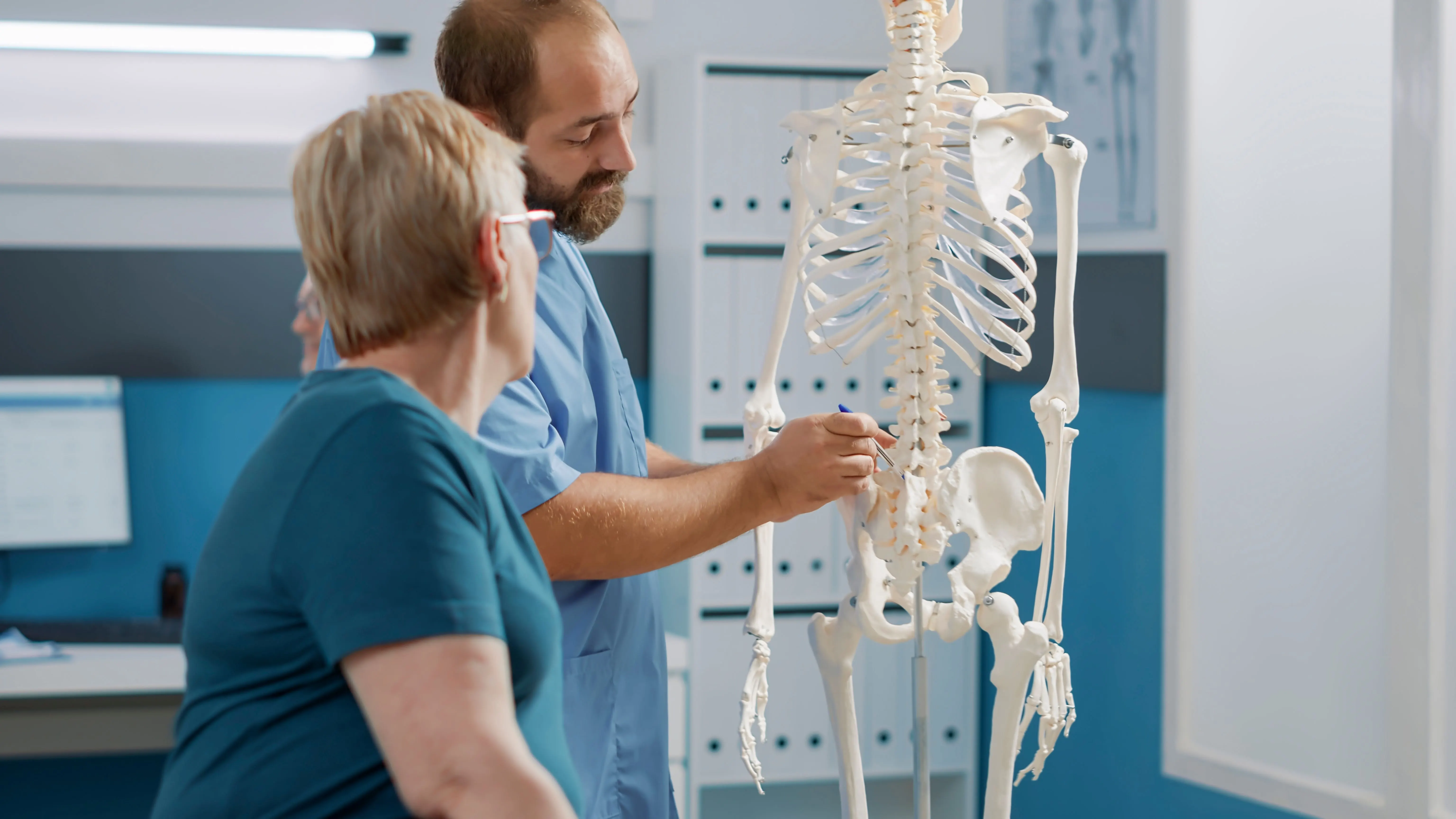



Spinal discs act as shock absorbers between vertebrae, composed of approximately 80% water in healthy young adults. Beginning around age 30, discs undergo a natural dehydration process called disc desiccation, losing water content at a rate of roughly 1-2% per decade. This gradual drying weakens the annulus fibrosus, making it more susceptible to tears and herniation.
As the disc loses hydration and elasticity, repetitive mechanical stress from bending, twisting, and compressive loading creates micro-tears in the outer fibers. Over time, these small tears accumulate until the weakened annulus can no longer contain the nucleus pulposus, allowing disc material to protrude and impinge on adjacent nerve roots.
The inflammatory cascade triggered by herniated disc material compounds the problem. When nucleus pulposus tissue contacts nerve tissue, it releases inflammatory cytokines that cause chemical irritation independent of mechanical compression, amplifying pain signals and creating the burning, radiating sensations patients experience.